
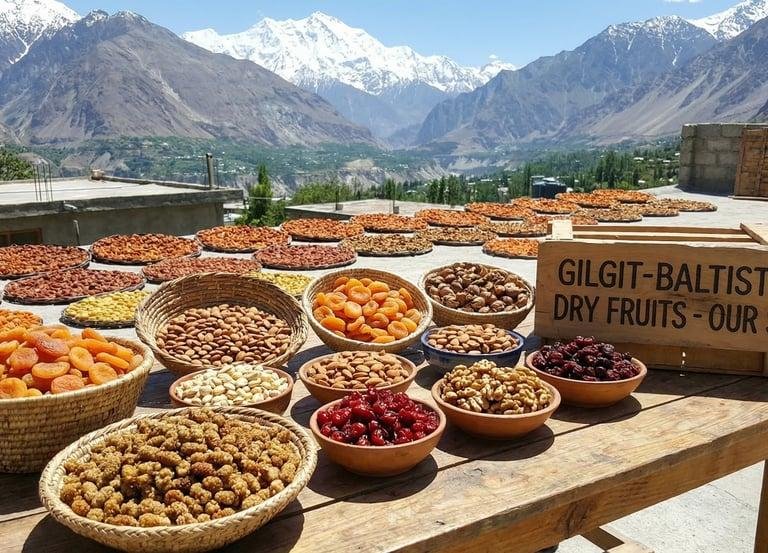
Gilgit-Baltistan is famous for its breathtaking mountains, beautiful valleys, and rich food traditions. Moreover, the region produces several delicious traditional dry fruits that people enjoy throughout the year. From sweet dried apricots to crunchy almonds and walnuts, these natural foods play an important role in local culture.
Furthermore, many families prepare dry fruits using traditional drying methods. As a result, these products preserve their natural flavors and remain popular among local communities. In this guide, we will explore the traditional dry fruits of Gilgit-Baltistan, their varieties, uses, nutritional value, and storage methods.
What Makes Traditional Dry Fruits Special?
Traditional dry fruits are an important part of the food culture of Gilgit-Baltistan. The region has a suitable climate for growing different fruits and nuts. In addition, local farmers use traditional methods to dry and preserve seasonal produce.
For example, families often dry apricots, apples, cherries, and mulberries during the summer season. Consequently, they can enjoy these fruits during colder months when fresh produce becomes less available.
Moreover, traditional dry fruits offer natural sweetness, distinctive flavors, and useful nutrients. Therefore, many people include them in their daily meals and snacks.
Top 10 Traditional Dry Fruits to Explore from Gilgit-Baltistan
Gilgit-Baltistan offers a variety of traditional dry fruits. Each variety has its own taste, texture, and local importance. Here are ten popular examples.
1. Dried Apricots
Dried apricots are among the most famous traditional dry fruits of Gilgit-Baltistan. Hunza and other valleys are particularly known for producing delicious apricots.
Local families traditionally dry ripe apricots in sunlight. As a result, the fruits develop a naturally sweet flavor and chewy texture. Moreover, dried apricots provide fiber and nutrients such as potassium.
People enjoy them as snacks. Additionally, they use dried apricots in traditional dishes and homemade recipes.
2. Almonds
Almonds are another popular dry fruit in the region. They have a crunchy texture and a mild, nutty flavor. Furthermore, almonds provide protein, healthy fats, fiber, and vitamin E.
Many families eat almonds in the morning or serve them to guests. Similarly, people add them to desserts, breakfast dishes, and other homemade recipes.
3. Walnuts
Walnuts are widely enjoyed in Gilgit-Baltistan. Their rich flavor and crunchy texture make them a favorite snack. In addition, walnuts contain healthy fats, fiber, and plant-based nutrients.
Local communities also use walnuts in traditional foods. For example, families may add crushed walnuts to desserts and other recipes. Therefore, walnuts remain an important part of regional food traditions.
4. Dried Mulberries
Dried mulberries are naturally sweet and have a soft, chewy texture. Many villages in Gilgit-Baltistan grow mulberry trees, making these fruits a familiar local food.
Moreover, dried mulberries provide fiber and natural carbohydrates. People often enjoy them as snacks. They can also add them to breakfast dishes, cereals, and homemade desserts.
5. Raisins
Raisins are dried grapes that offer natural sweetness and a chewy texture. They are easy to store and convenient to eat. Furthermore, raisins contain fiber and several minerals.
People commonly add raisins to rice dishes, desserts, and breakfast meals. In addition, they make a simple snack for children and adults.
6. Dried Apples
Dried apples are another traditional fruit product enjoyed in the region. Families slice fresh apples and dry them to preserve their flavor for longer periods.
As a result, dried apples become convenient snacks for different seasons. They have a sweet or slightly tangy taste. Moreover, they provide fiber and natural carbohydrates.
7. Dried Cherries
Gilgit-Baltistan is also known for its mountain fruits, including cherries. Local families can preserve seasonal cherries by drying them.
Dried cherries have a concentrated sweet and slightly sour flavor. Furthermore, they can be eaten as snacks or added to homemade food. However, their availability may depend on the season and local production.
8. Dried Figs
Dried figs are naturally sweet and have a soft texture with tiny edible seeds. They are enjoyed as snacks and can also be included in different recipes.
In addition, dried figs provide dietary fiber and minerals. Therefore, many people include them in a balanced diet in moderate portions.
9. Dried Pears
Dried pears offer a naturally sweet taste and a chewy texture. Families can slice fresh pears and dry them for later use.
Moreover, dried pears provide fiber and natural carbohydrates. They are easy to carry and make a convenient snack during travel or outdoor activities.
10. Dried Peaches
Dried peaches are another delicious fruit product. They have a sweet flavor and a chewy texture. Similarly, families can preserve ripe peaches through traditional drying methods.
Dried peaches are suitable for snacking and homemade recipes. Furthermore, they allow people to enjoy the taste of seasonal peaches beyond the harvest period.
Health Benefits of Eating Traditional Dry Fruits
Traditional dry fruits contain different nutrients that support a balanced diet. However, their nutritional value varies depending on the type, preparation method, and serving size.
Here are some general benefits:
- Provide dietary fiber: Many nuts and dried fruits contain fiber, which supports normal digestion.
- Supply energy: Dried fruits contain natural carbohydrates. Therefore, they provide a convenient source of energy.
- Contain healthy fats: Almonds and walnuts provide unsaturated fats.
- Offer essential nutrients: Different varieties contain vitamins and minerals.
- Make convenient snacks: Most dry fruits are easy to store, carry, and serve.
Nevertheless, dried fruits often contain more concentrated natural sugars than fresh fruits. For this reason, enjoy them in moderate portions as part of a balanced diet.
How to Enjoy Traditional Dry Fruits
There are several simple ways to include traditional dry fruits in your daily routine. For example:
- Morning snacks: Eat a small portion of almonds, walnuts, or dried apricots.
- Breakfast meals: Add raisins, dried mulberries, or chopped nuts to oatmeal.
- Traditional recipes: Use walnuts and dried fruits in homemade dishes.
- Healthy desserts: Add chopped almonds, figs, or dried peaches to desserts.
- Travel snacks: Carry a small pack of mixed dry fruits for convenient snacking.
Furthermore, you can combine different varieties to enjoy a range of flavors and textures.
How to Choose Quality Traditional Dry Fruits
Choosing good-quality dry fruits is important for taste and freshness. Therefore, check the following points before buying:
- Check freshness: Choose products with a pleasant, natural smell.
- Inspect appearance: Avoid items with visible mold, unusual discoloration, or signs of spoilage.
- Check packaging: Prefer clean, sealed packaging that protects the products from moisture.
- Compare quality: Consider freshness, texture, and storage conditions rather than price alone.
- Choose reliable sellers: Buy from sellers who provide clear product information.
In addition, always check the packaging date and expiry information when available.
How to Store Traditional Dry Fruits and Keep Them Fresh
Proper storage helps maintain the flavor and quality of dry fruits. First, keep them in clean, airtight containers. Next, store the containers in a cool and dry place away from direct sunlight.
Furthermore, protect dry fruits from moisture because excess moisture can cause spoilage. You can also refrigerate certain varieties, especially when you want to store them for longer periods.
Finally, check stored products regularly and discard any items that show signs of mold or an unusual smell.
Why Choose Traditional Dry Fruits from Gilgit-Baltistan?
Gilgit-Baltistan has a rich agricultural heritage and a long tradition of preserving seasonal fruits. Moreover, local communities have passed these food practices from one generation to another.
Traditional dry fruits reflect the region’s natural resources, local knowledge, and food culture. In addition, they offer a variety of flavors that make them popular with visitors and local families.
At GB Soghat, you can explore products inspired by the traditional food culture of Gilgit-Baltistan. Therefore, learning about local dry fruits also helps you appreciate the region’s agricultural traditions.
Conclusion: Discover Traditional Dry Fruits of Gilgit-Baltistan
Traditional dry fruits are an important part of Gilgit-Baltistan’s food culture. From dried apricots and almonds to walnuts, mulberries, and dried cherries, each variety offers a unique taste and texture.
Moreover, these products connect local communities with their agricultural heritage. Whether you enjoy them as snacks, add them to breakfast, or use them in traditional recipes, they offer a convenient way to enjoy regional flavors.
Overall, exploring traditional dry fruits is a wonderful way to discover the natural foods and cultural traditions of Gilgit-Baltistan.